The meat
From the fair
to the ageing room.
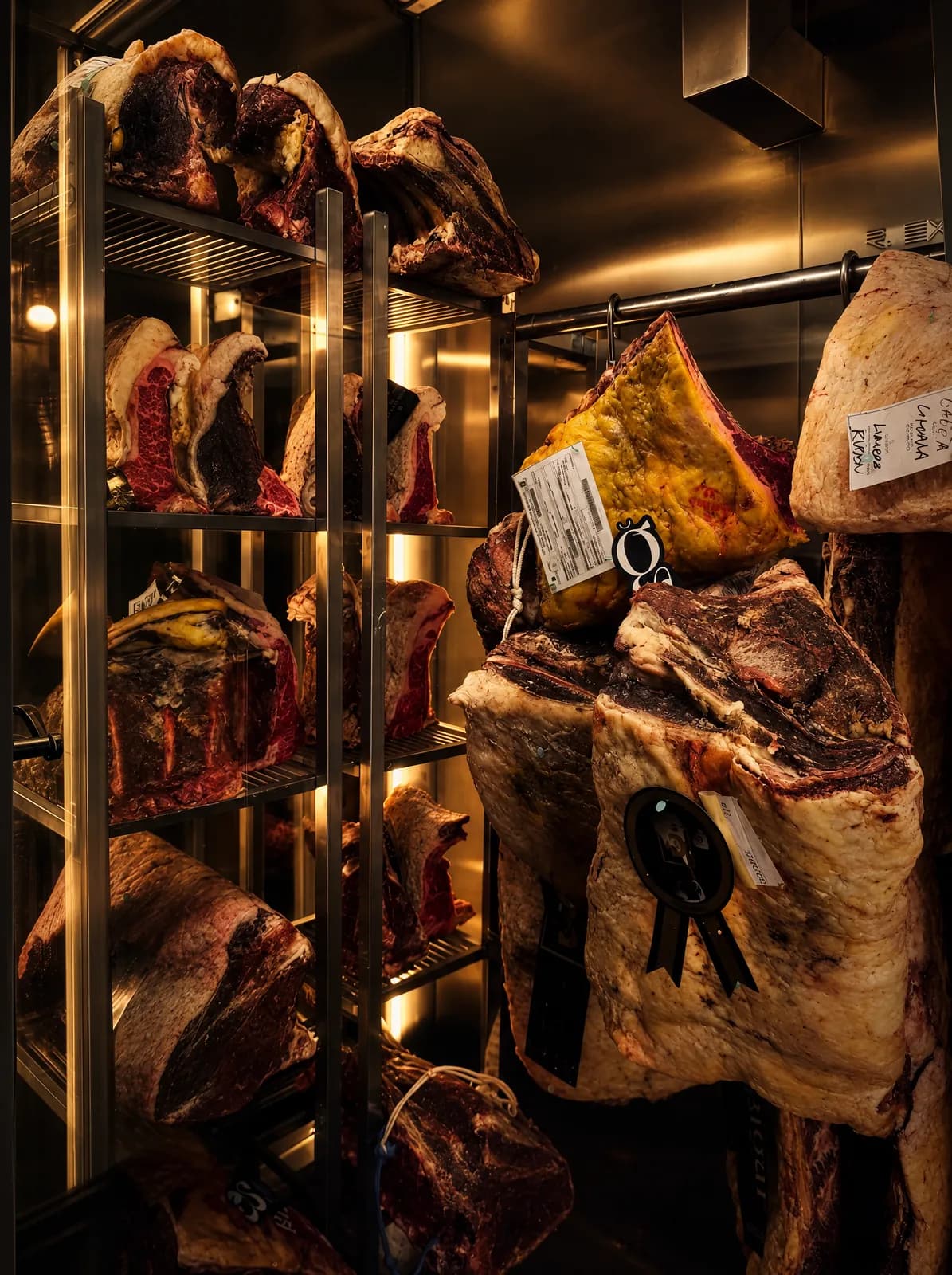
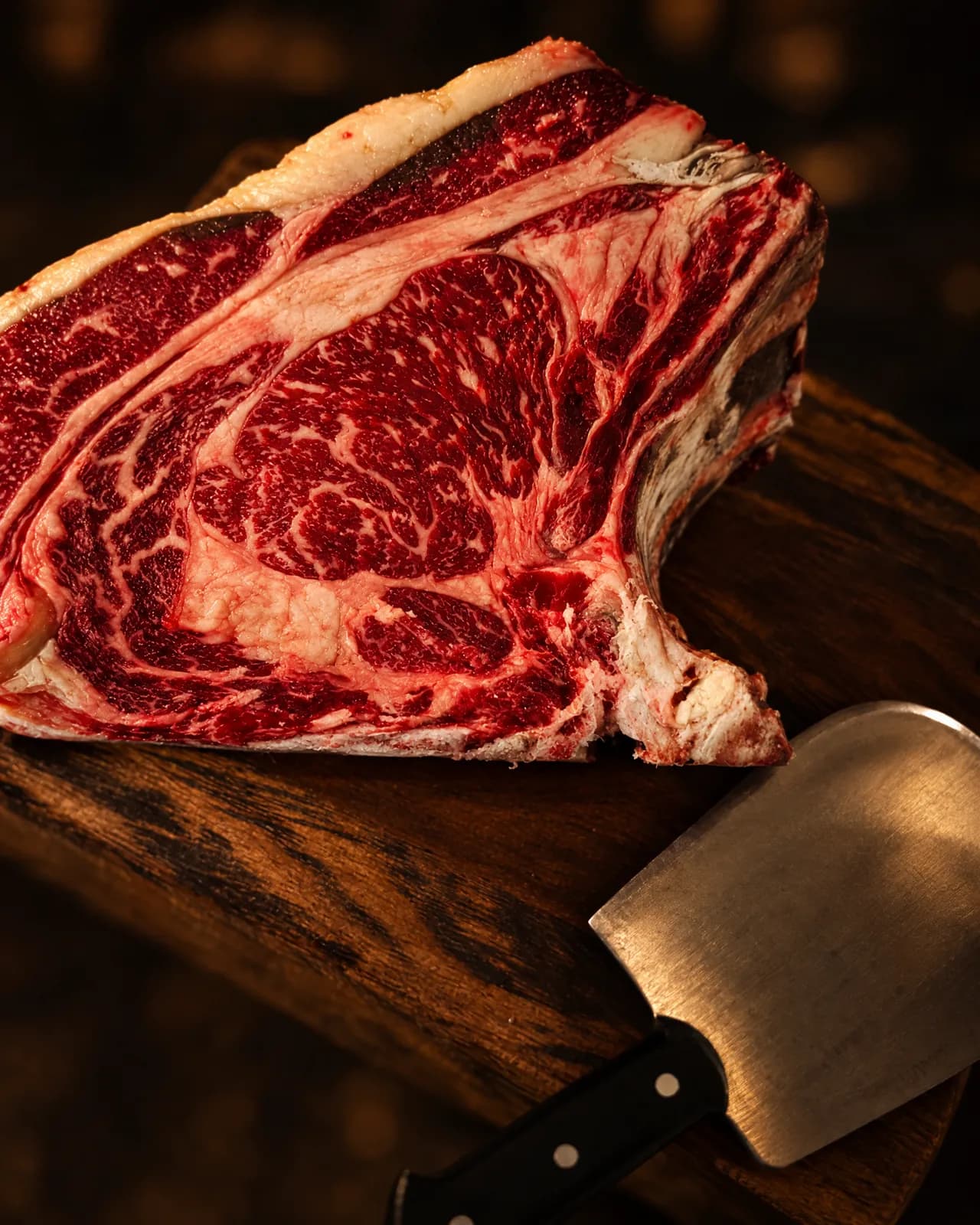
We choose the animals at cattle fairs and dry-age the meat in our own ageing room before it goes on the grill.
01 · The fair
First,
the fair.
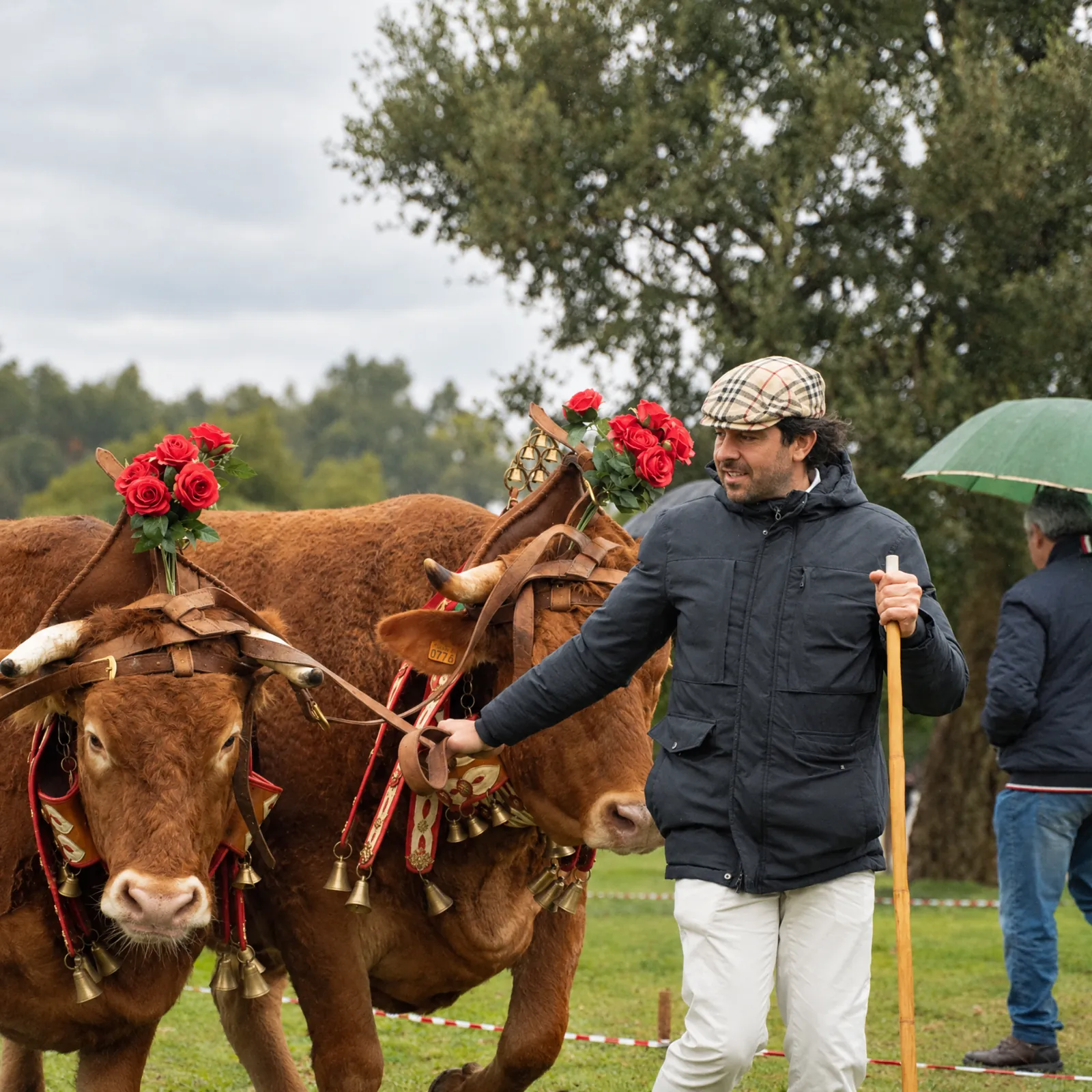
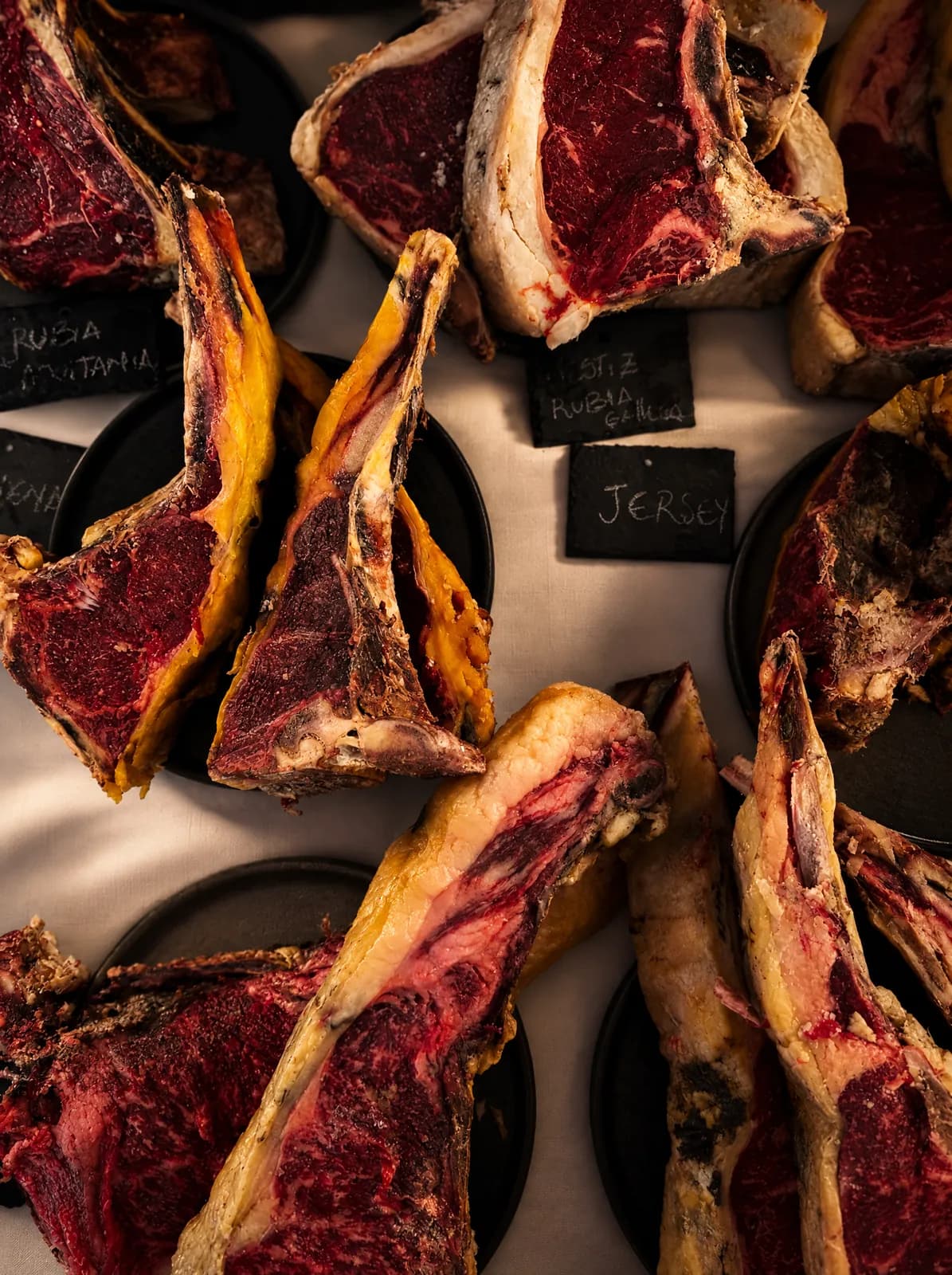
We choose the cows and oxen we age at cattle fairs, looking at each animal up close. We consider its breed, its age, how it was fed and where it was reared.
If we are not convinced,
we do not buy.
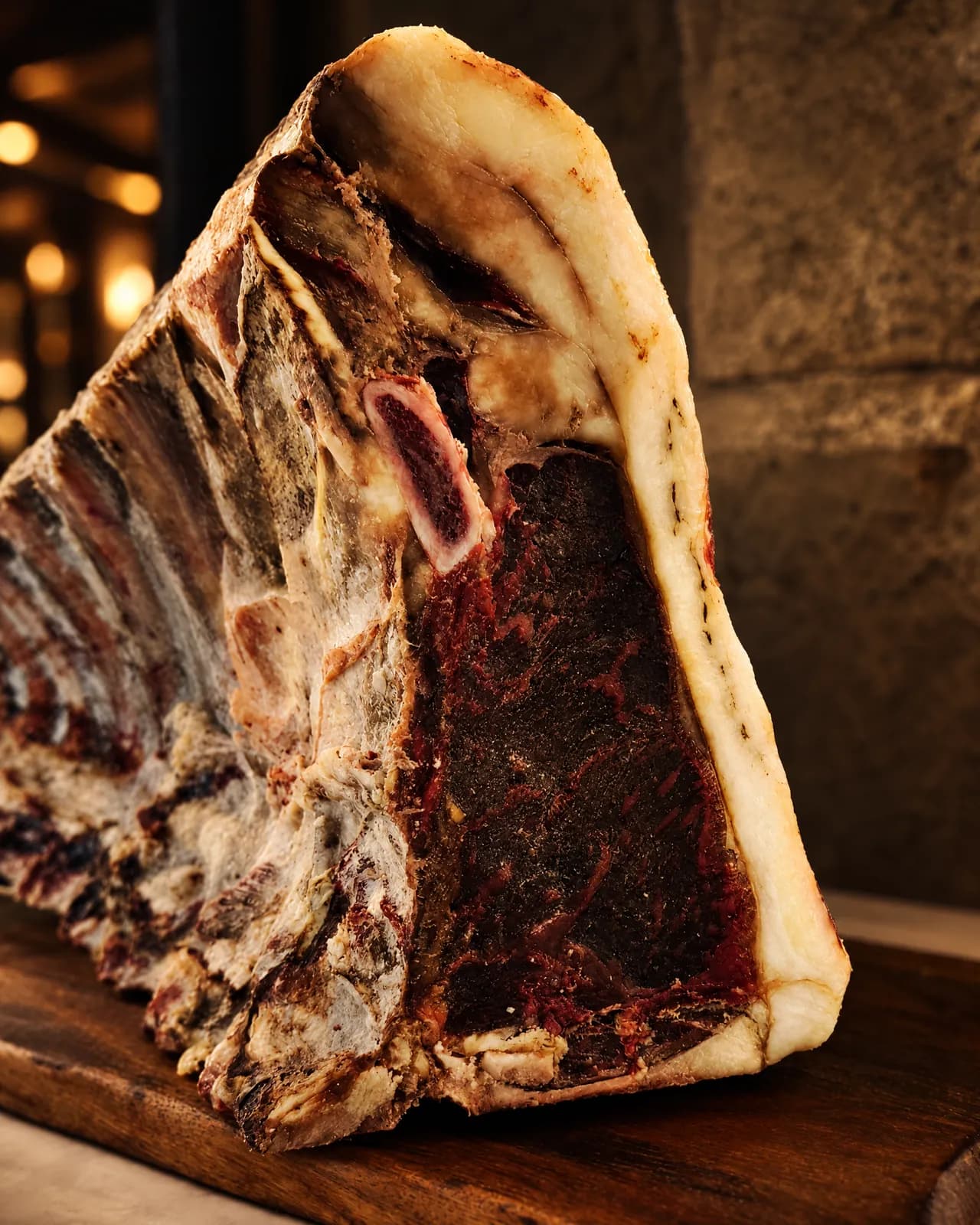
The dry-ageing room
Sixty days in the ageing room.
- Day 1
The piece arrives whole.
On the bone and with its fat. The room is kept at a constant cold and the air never stops moving.
- Day 15
It loses water.
As the moisture goes, the flavour of the meat concentrates.
- Day 30
It grows more tender.
The meat’s own enzymes slowly break down its fibres.
- Day 45
The crust forms.
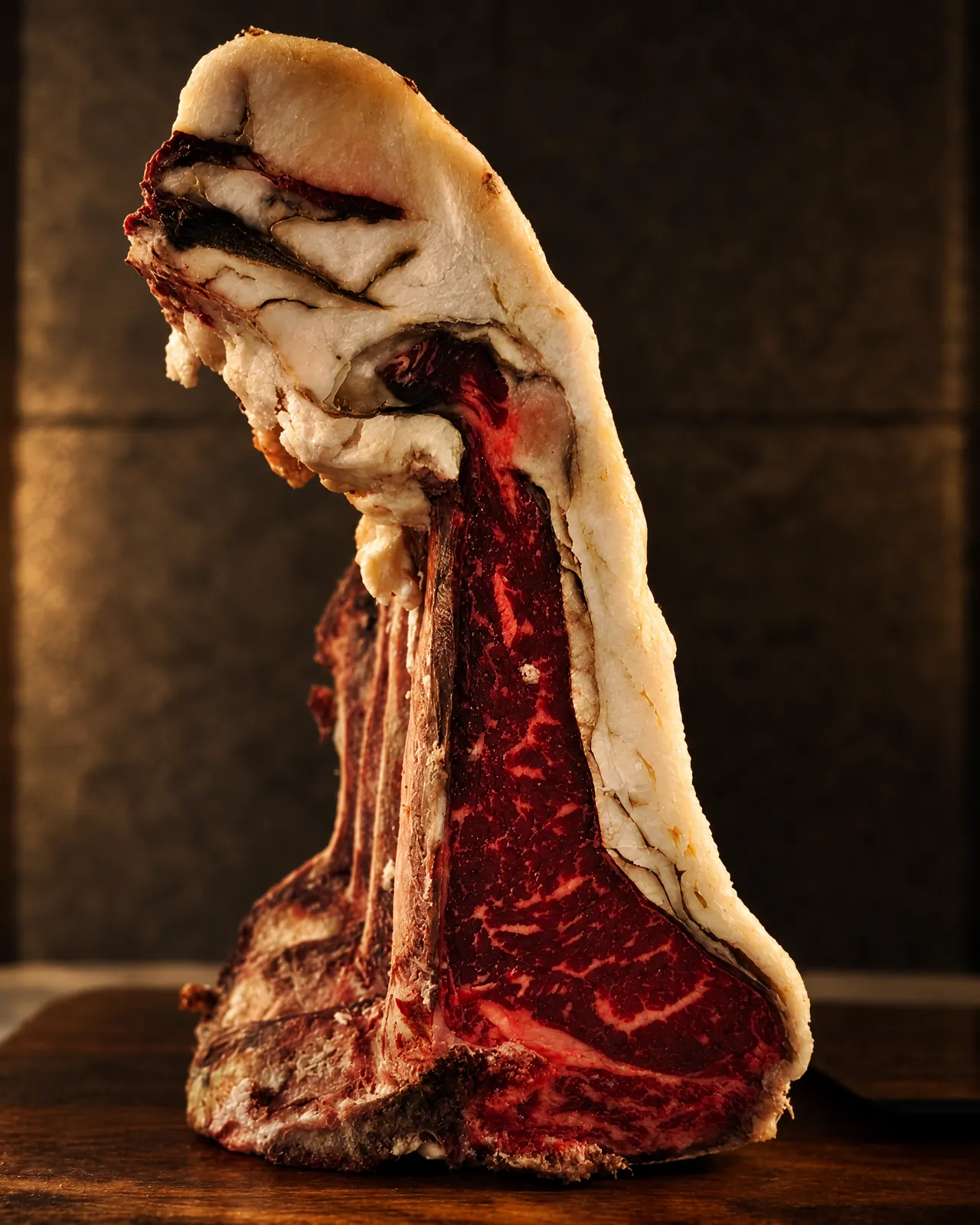
A dark, dry rind appears on the outside and protects the inside.
- Day 60
More than sixty days.
Some pieces stay for more than sixty days. The crust is trimmed away before cooking.
03 · The breeds of the house
The breeds
we serve.
- 01
Rubia Gallega cow
A Galician breed, with richly marbled meat and a deep flavour.
Oxtail · Huevos rotos with oxtail · Cecina in the Lumbre salad
- 02
Pajuno cow and ox
A native breed from the mountains of eastern Andalusia, listed as endangered.
Tartare on bone marrow · Picaña by weight · Charcoal-grilled chorizo criollo
- 03
Wagyu
A Japanese breed, famous for its marbling.
Wagyu cecina with toasted bread and extra virgin olive oil
- 04
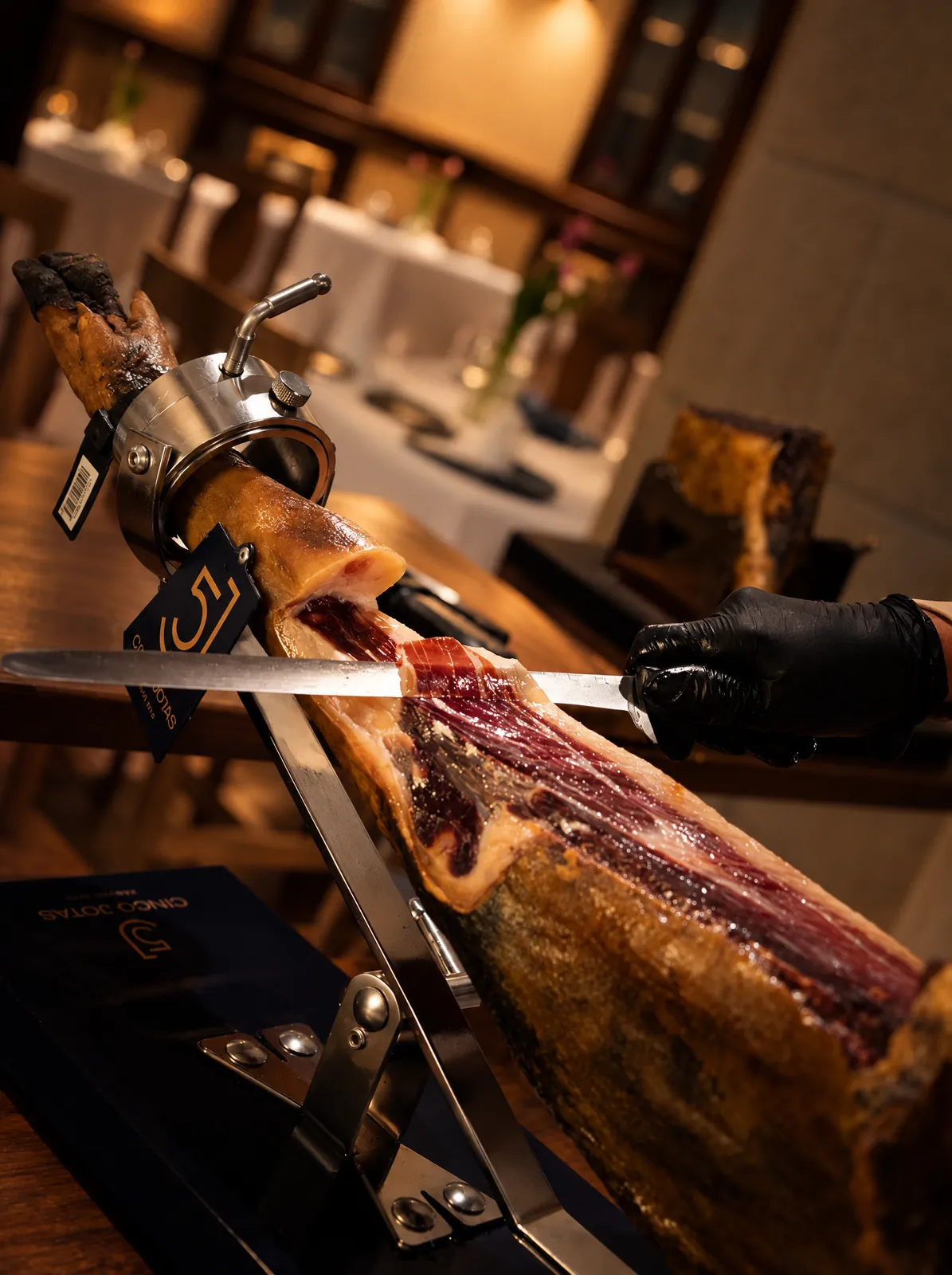
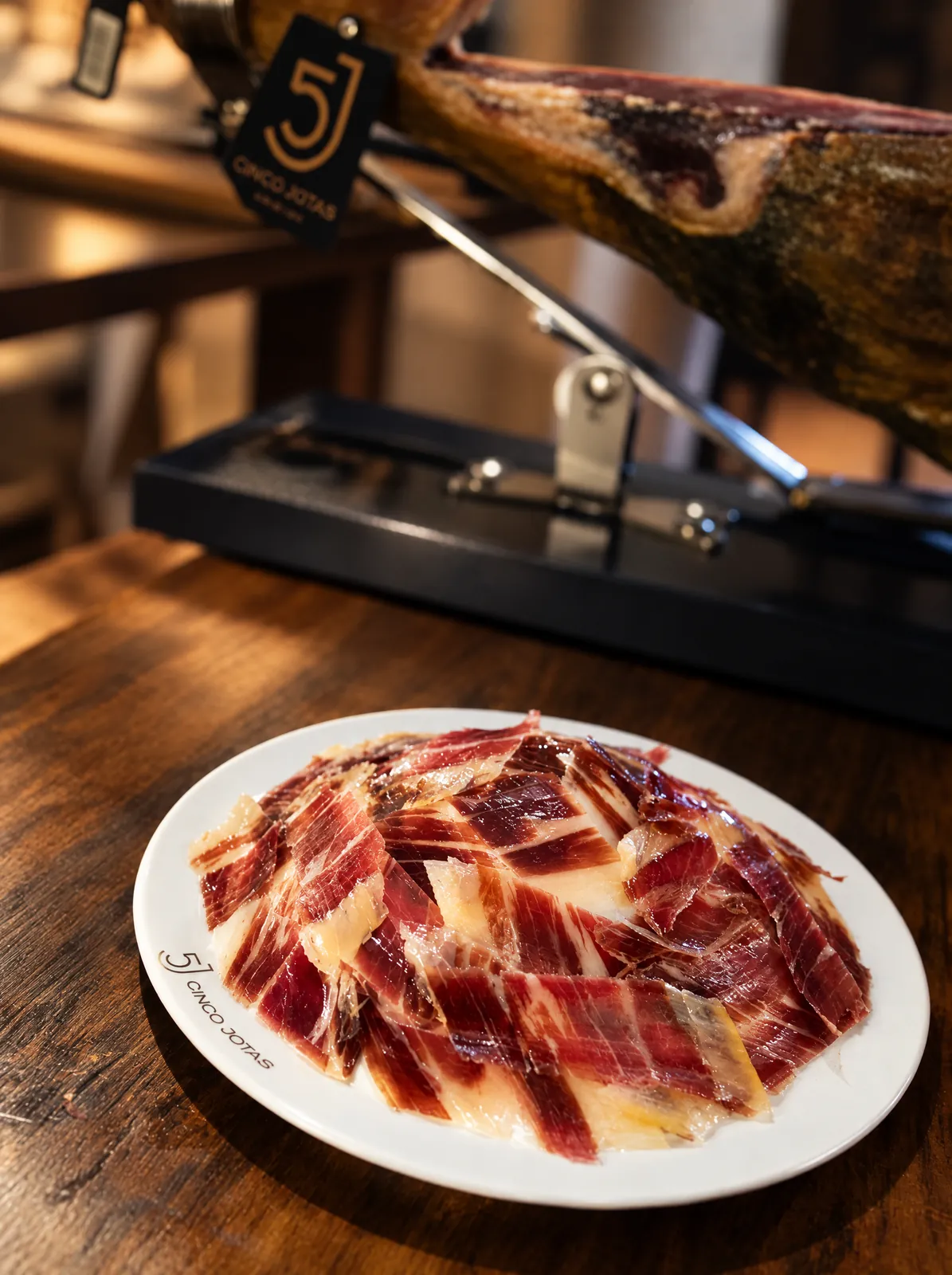
Ibérico 5 Jotas
Sánchez Romero Carvajal, in Jabugo.
Hand-carved ham · Presa ibérica
- 05
San Pascual pork
The tomahawk: the chop on its long bone.
Pork tomahawk
- 06
Suckling lamb
The shoulder, slow-cooked and finished in the oven.
Shoulder of suckling lamb
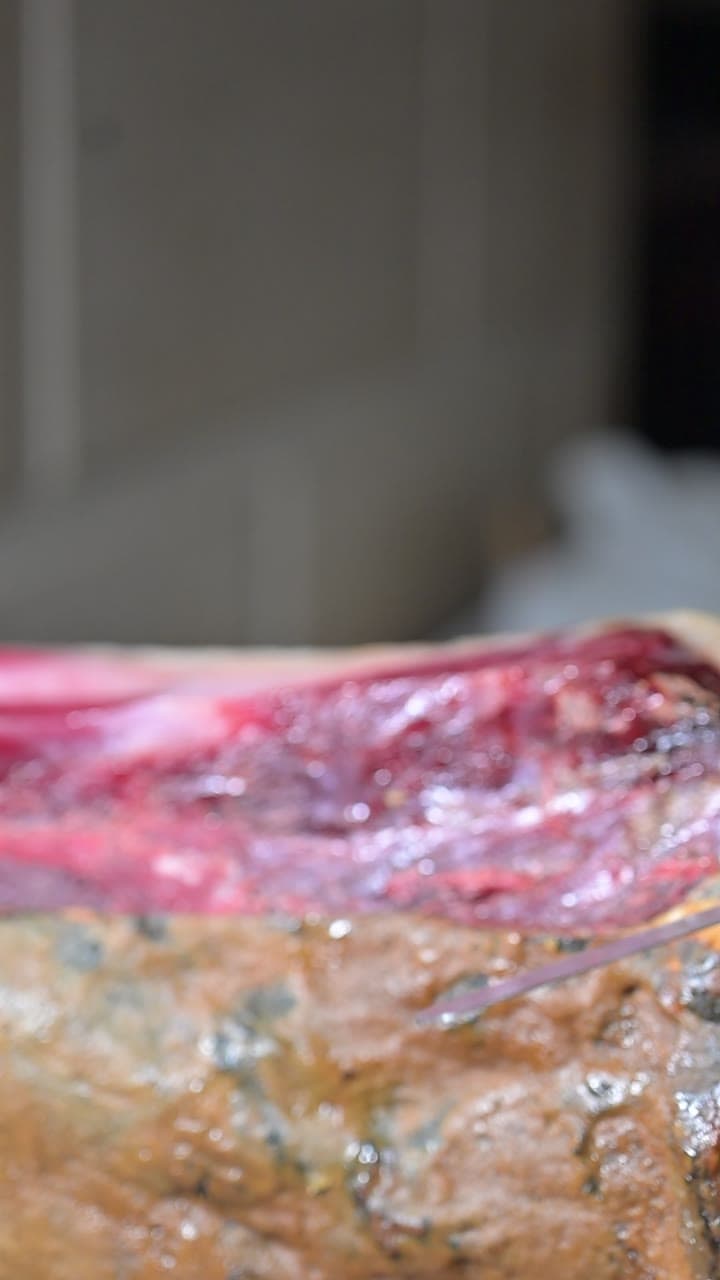
04 · The cut
Carved
by hand.
The “Sánchez Romero Carvajal 5 Jotas” ham is carved by hand into thin slices and served with toasted bread and grated tomato. The Pajuno ox picaña is cut by weight, from four hundred grams.